Managing multiple facilities with limited staff felt like a juggling act. Each location had its own spreadsheets and logs, and consolidating information was a constant headache. I quickly realized that if we continued relying on manual methods, errors would multiply and maintenance tasks would be missed. Finding a structured, accessible solution became critical.
Starting with spreadsheets
At first, we used Excel spreadsheets to track all equipment, schedules, and technicians. For a small team of six overseeing around 100 assets, this system seemed adequate. We could filter by location, sort by maintenance priority, and highlight overdue tasks. Initially, it gave a sense of control and provided an easy way to onboard new staff.
Early successes and limitations
The spreadsheets allowed us to see which assets were due for maintenance and coordinate technicians effectively. We could pull reports and track simple metrics. For a few weeks, everything ran smoothly. But as our team grew and the number of assets increased, inconsistencies started to appear. Spreadsheets could not enforce proper data entry or prevent accidental overwrites.
Errors and version conflicts
Each site maintained its own copy, and reconciling updates became time-consuming. Equipment listed as available in one spreadsheet was sometimes under repair at another location. Missed updates led to delays, and managers had to spend hours cross-checking entries. These challenges highlighted why spreadsheets alone were not sufficient for multi-site operations.
Exploring free CMMS solutions
We started researching accessible maintenance platforms, focusing on solutions with no licensing fees. Free CMMS platforms stood out as they provided centralized data, automated scheduling, and multi-user access without increasing costs. Our goal was to reduce errors, simplify reporting, and streamline maintenance across all sites.
Implementing a free CMMS
Transitioning from spreadsheets was gradual. We migrated essential records to the free cmms while continuing to reference Excel for historical data. Staff needed training to ensure accurate and consistent data entry. Within a few weeks, the system became the primary tool for tracking maintenance schedules, logging repairs, and monitoring asset history.
Benefits for multi-site coordination
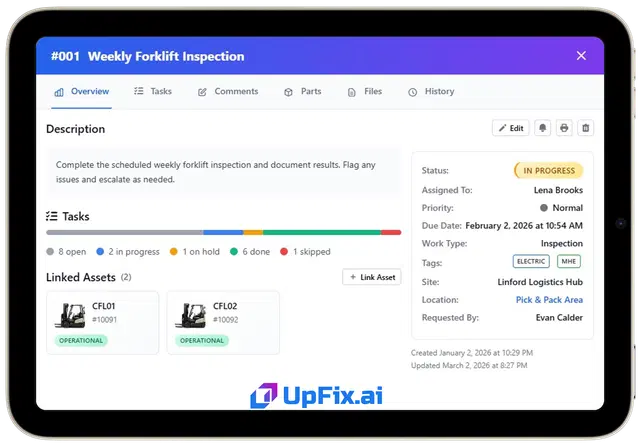
With a free CMMS, all locations accessed a single database. Managers could monitor equipment status in real-time, schedule preventive maintenance, and generate reports instantly. Automated alerts ensured recurring tasks were not missed. Multi-location management became far simpler compared to the spreadsheet approach.
Improving accountability and accuracy
The free CMMS reduced human error significantly. Technicians could log work on mobile devices, and supervisors had full visibility of maintenance history. Audits became easier because data was centralized and standardized. The platform provided reliable tracking for all assets without adding extra administrative work.
Lessons learned from adoption
One key takeaway is the importance of choosing tools suited for team size and operational complexity. Spreadsheets work for small teams with limited assets, but as scale increases, errors and inefficiencies grow. Free CMMS platforms offer the structure, automation, and accessibility needed for long-term efficiency without significant cost.
Enhancing workflow efficiency
Automated reminders and real-time updates freed up time previously spent reconciling spreadsheets. Maintenance schedules were more consistent, and tracking asset history became seamless. Team members could focus on completing tasks rather than managing data, which improved overall operational efficiency.
Staff buy-in and adaptation
Initially, some staff were hesitant to leave familiar spreadsheets behind. However, the simplicity and accessibility of the free CMMS won them over. Mobile access, instant reporting, and reliable notifications made daily operations smoother. Adoption was faster than expected once the benefits became visible.
Conclusion
Our experience managing maintenance across multiple facilities demonstrated that spreadsheets alone are not sustainable for growing operations. Free CMMS platforms provide centralized records, automated scheduling, and accessibility for multiple users without licensing costs. By starting with spreadsheets and transitioning to a free CMMS, we improved accuracy, reduced missed tasks, and streamlined workflows across all locations. For any team managing equipment across sites, leveraging a free CMMS is a practical step toward reliable, efficient operations.