Your HVAC system is the largest consumer of energy in your home. Nearly half of the energy used in your home goes to your HVAC system. You can greatly reduce your carbon footprint by upgrading to smart HVAC. Not to mention, you’ll save money on energy bills.
In this article, we’ll cover how smart HVAC systems work and how you can make your home greener.
How Do Smart HVAC Systems Work?
Smart HVAC systems utilize sensors and internet connectivity. These intelligent thermostats learn your habits and know when to heat or cool your home. Instead of programming a thermostat manually, your smart thermostat does it automatically.
Smart thermostats connect to your phone over your Wi-Fi network. This means that you can change the temperature in your home from anywhere. Because of this, you won’t be cooling an empty home all day while you’re at work or on vacation.
Learn Your Schedule
Your smart thermostat pays attention to patterns in your home. It notices when you regularly leave and return to your home. It also knows when you like your temperature cooler or warmer during the day.
After several weeks, your thermostat builds you a personalized schedule. It knows your lifestyle and will heat and cool your home accordingly. This helps the environment by ensuring your system doesn’t run when no one is home. A standard thermostat may cool your whole house all day while you’re at work.
Zone Control
Some smart thermostats even allow you to zone control your home. This means that you can have your bedroom at one temperature and your guest room at another. Since you’re likely not using your guest bedroom every day, there’s no need to cool it.
This is usually done by installing smart vents or additional thermostats around your home. Each room will be heated or cooled to your preference. With zone control, you can save up to 30% on heating and cooling costs.
Real-Time Energy Usage Reports
Smart thermostats provide you with real-time energy usage reports. You can check how much energy you’re using each day, week, or month on your smartphone. By making you aware of how much energy you use, you can make better decisions.
With these reports, you’ll quickly identify times where you’re using the most energy. You can then change your behavior during these peak hours to avoid sky-high energy bills.
Sync With Renewable Energy Sources
If you own solar panels, smart thermostats can sync with them. Your smart thermostat will run more on sunny days when you’re generating more solar power. Because of this, you can use more clean energy and less from the power grid.
Some smart thermostats will even sync with local weather reports. If a hot day is coming, your system can cool your home before the hottest part of the day. Therefore, cooling your home while consuming less energy.
Maintenance Alerts
When something goes wrong with your HVAC system or when you need to replace the air filter, your smart thermostat will let you know. By maintaining your system, you ensure that it runs as efficiently as possible.
A dirty filter forces your HVAC system to consume more energy. So, by receiving alerts when you need to replace your air filter, you keep your system clean. A clean HVAC system can save you up to 15% on energy usage.
Pick the Right Smart Thermostat
You can upgrade your current thermostat to a smart thermostat. Most current heating and cooling systems are compatible with smart thermostats.
Some of the most popular smart thermostats are Nest, Ecobee, and Honeywell Home. Prices range from $100 to $250. However, with the money you’ll save on energy bills, you’ll make up for that cost in 1-2 years.
Make sure you purchase an Energy Star certified thermostat. These thermostats meet the energy efficiency standards set by the EPA.
Installation
Smart thermostats are typically easy for the average person to install. If you’re not handy with electrical wiring, hire a professional to help you out. Smart thermostats usually cost $100 to $200 to be professionally installed.
When you first set up your smart thermostat, you’ll need to enter your home’s information. Like how many floors your house has and if you use heat pumps or air ducts. Your system will use this info to run more efficiently.
Saving as Much Carbon Footprint as Possible
In order to save as much as possible, you should take full advantage of your smart thermostat. NHS told us that during warmer months, raise your thermostat temperature a few degrees. During cold months, lower temperatures by a few degrees.
Try setting your thermostat to 78 degrees in the summer and 68 degrees in the winter. Studies show that this is the ideal comfortable temperature for most people. By changing your thermostat by 2 degrees, you can save 10% on heating and cooling energy.
Take advantage of the ‘away mode’ on your thermostat. If you allow it to detect you left via your phone’s location, it knows when you leave the house. There’s no reason to keep your house comfortable when no one is there.
Other Smart Features
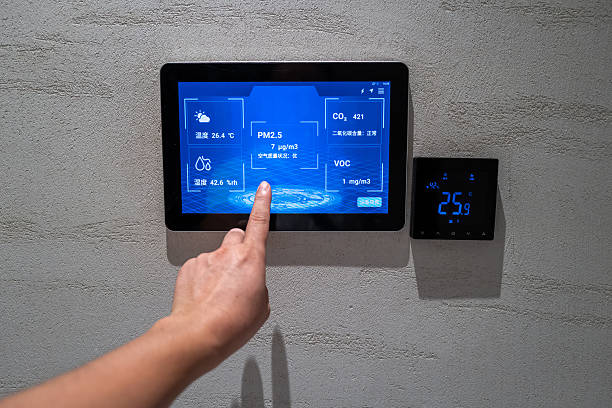
Some smart thermostats will monitor your air quality at home. Not only will they keep your home comfortable, but they’ll use less energy to do it. Things like tracking humidity levels and filtering out pollutants from the air.
Many smart thermostats allow you to connect them to voice assistants. Devices like Alexa and Google Home can change your temperatures for you. You can simply tell your assistant to raise or lower temperatures.
Geofencing is another great feature of many smart thermostats. They know when you’re leaving or coming home and adjust temperatures accordingly. Because of geofencing, you won’t waste energy cooling your home all day while you’re at work.
Smarter for the Environment
By switching to a smart HVAC system, you can save an average of 1,500 pounds of carbon emissions per year. That’s like planting 75 trees every year! Over a decade, your smart thermostat could prevent 15,000 pounds of CO2. Not only will you save on energy costs, but you’re helping the environment.
As smart HVAC technology advances, systems will get even better. Meaning your new smart thermostat will only continue to help the environment. Smart thermostats are just one of the many ways you can live an eco-friendly lifestyle. Consider switching to a smart thermostat today to save the planet.
HVAC Troubleshooting FAQ
Why is my HVAC making rattling or banging noises?
A rattling noise is usually a sign that something is loose or broken. Tighten any loose screws, secure panels, and clear debris from the unit itself. If it sounds like screeching or grinding, your blower belt may be worn out, or your motor may need lubrication. If you hear loud banging, turn the system off and give us a call—there could be serious damage.
How often should I change my HVAC filter?
We recommend changing your filter every 1–3 months. If you have pets in the house, allergies, or live in a dusty climate, check it monthly. Another trick is to hold the filter up to a light. If you can see through it, you’re good to go. Changing your filter improves air flow and efficiency, which can lower your energy bills and help prevent strange noises.
Could my thermostat be causing HVAC problems?
Yes! Oftentimes HVAC problems are caused by the thermostat. First, make sure you have it set to heat or cool. Next, check your fan setting to make sure it aligns with your needs. Weak batteries can also lead to short-cycling or temperature swings. Additionally, make sure your thermostat isn’t exposed to direct sunlight or any other heat sources that could cause it to read the wrong temperature.
How do I know if my ductwork is leaking?
Leaks in your ducts can send up to 30% of your conditioned air straight into the attic or crawl space. To check for leaks, run your HVAC system and feel along the joints and seams. If you feel air escaping, you’ve got leaks. You can fix small leaks using metal tape or mastic sealant (duct tape is surprisingly ineffective). Not only will this make your HVAC run smoother, you’ll see savings on your monthly bill.
What should I do if my AC has ice on it?
Ice on your AC is typically caused by low refrigerant, and that means you have a leak. Turn off your system and wait for the ice to melt. Don’t try to simply add more refrigerant to the system—you’ll need tools and a licensed technician to handle that for you. Your technician will find the leak, repair it, and recharge your system.
When should I call a professional instead of troubleshooting myself?
If you notice any electrical issues, refrigerant problems, or damaged/broken parts, it’s time to call a professional. But even if your system looks and sounds good, we recommend annual maintenance anyway. Maintenance visits allow us to spot trouble spots before they become bigger problems. It’s also a chance for us to provide unique tips for your specific home. Think of us as your HVAC insurance policy.