Living spaces are becoming more dynamic than ever. In many urban homes, a single room may function as a lounge, workspace, and social area within the same day. This shift has changed how furniture is evaluated. It is no longer enough for a sofa to simply look good. It needs to adapt to different uses while maintaining comfort and visual balance.
As a result, modular sectional sofas have moved from a niche option to a mainstream choice. Their growing popularity is not driven by trends alone, but by their ability to respond to real spatial and lifestyle constraints.
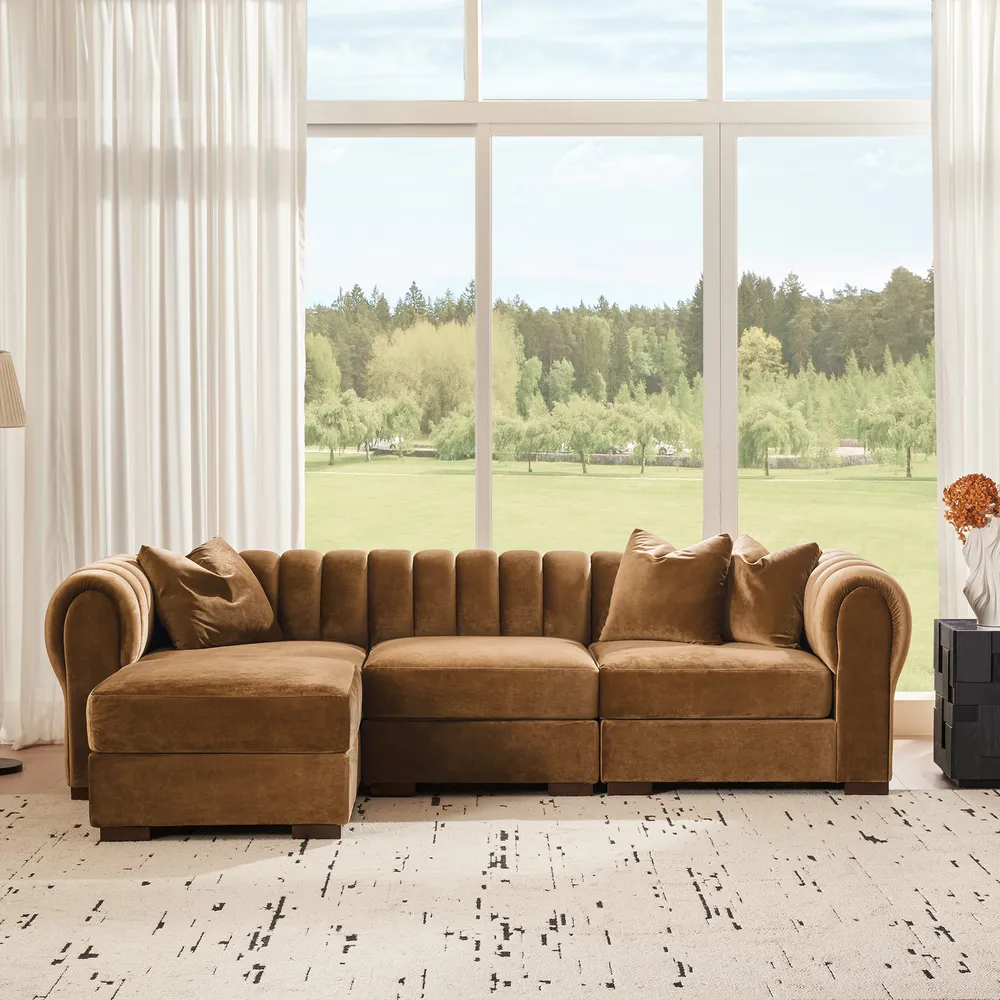
1. Adapting to Limited Space Without Compromising Function
In apartments under 80 square meters, the living room often shares space with dining or working areas. In these layouts, fixed sofas can quickly become restrictive. A standard three-seater sofa, typically around 220 to 240 cm in width, occupies a fixed footprint that cannot be adjusted as needs change.
A modular sectional sofa solves this limitation by breaking the structure into individual units. Each module, usually between 70 and 100 cm in width, can be arranged in different configurations. This allows users to scale the seating area up or down depending on the available space.
For example, a compact L-shaped layout may work well in a 15 square meter living area, while the same modules can be rearranged into a larger configuration when moved into a bigger home. This level of adaptability makes modular designs especially suitable for renters or households that relocate frequently.
2. Supporting Multi-Functional Living
The modern living room is no longer a single-purpose space. It often needs to support activities such as working, relaxing, and hosting guests.
This shift requires furniture that can transition between different use cases without friction. A modular sectional sofa allows users to create layouts that match specific activities. A corner configuration can support lounging, while a split arrangement can open up space for movement or social interaction.
Seat dimensions also play a role in functionality. Modules with seat depths of 50 to 60 cm are better suited for upright sitting, which is important for tasks such as working or reading. Deeper modules, typically above 65 cm, provide a more relaxed posture for leisure.
Because these elements can be combined within the same system, modular sofas offer a level of flexibility that fixed designs cannot match.
3. Improving Space Efficiency Through Configurable Layouts
Space efficiency is not only about size, but also about how furniture interacts with circulation and layout.
A well-planned living room should maintain at least 70 to 90 cm of walkway clearance. Fixed sofas can make it difficult to achieve this, especially in irregularly shaped rooms. In contrast, modular designs allow users to adjust configurations to preserve movement paths.
For instance, separating modules into smaller seating units can improve circulation in narrow spaces. Alternatively, combining them into a continuous sectional can maximize seating capacity in larger rooms.
This ability to respond to spatial constraints makes modular sectional sofas a practical solution for a wide range of layouts, from compact apartments to open-plan homes.
4. Extending Product Lifespan Through Flexibility
Furniture is increasingly expected to last longer, both from a cost and sustainability perspective.
Traditional sofas are often replaced when they no longer fit a new space or layout. In contrast, modular systems extend product lifespan by allowing partial adjustments instead of full replacement.
If a household moves from a smaller apartment to a larger home, additional modules can be added to expand the sofa. If space becomes more limited, the configuration can be reduced without discarding the entire piece.
This flexibility reduces waste and improves long-term value. It also aligns with the growing preference for products that can adapt over time rather than being replaced frequently.
5. Enhancing Design Consistency Across Different Spaces
Another advantage of modular sofas is their ability to maintain design consistency.
Because modules share the same structure, materials, and proportions, they create a unified visual language even when configurations change. This is particularly important in open-plan interiors where visual continuity contributes to a more cohesive environment.
Neutral color palettes and clean lines further enhance this effect. A well-designed modular sectional sofa can integrate into different interior styles without requiring major adjustments to the surrounding space.
This makes it easier for homeowners to update or rearrange their interiors while maintaining a consistent design identity.
Conclusion
The increasing demand for flexible living spaces is reshaping how furniture is designed and selected. Sofas are no longer static elements. They are expected to adapt, evolve, and support a range of daily activities.
Modular sectional sofas meet these expectations by offering configurability, efficient use of space, and long-term adaptability. They allow users to respond to changing needs without compromising comfort or design.
In this context, choosing a modular sectional sofa is not just a matter of style. It is a practical decision that reflects how modern living spaces are evolving toward greater flexibility and efficiency.